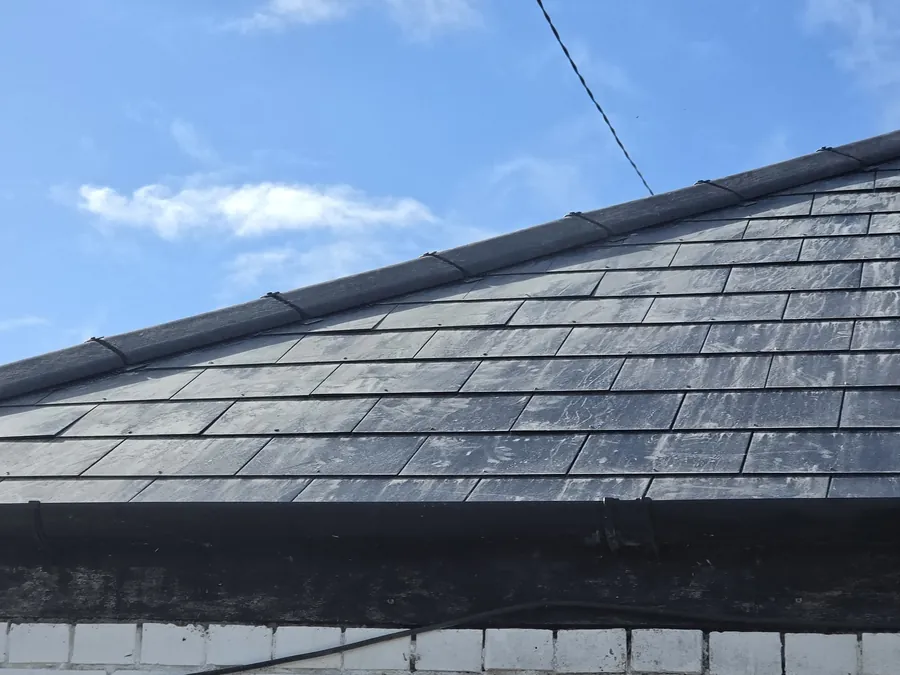
Ridge & Hip Tile Repairs In Newcastle
Can you see a gap along the top of the roof where the mortar used to be?
Re-bedding, dry ridge and dry hip systems, hip irons and bonnet hip repairs on slate and tiled roofs across Newcastle upon Tyne and Tyne and Wear
The ridge is the highest, windiest line on the house and it is held on by a strip of mortar that was mixed sixty years ago. On the high ground at Westerhope and Low Fell, and on the sea-front rows at Whitley Bay and Seaburn, that mortar has been losing a fight with the wind for decades. We re-bed ridges and hips where the tiles are good, convert them to a screwed dry system where the wind calls for it, and refit hip irons and bonnet hips on the 1930s houses that still have them. Free inspection, quote in writing.
- Ridge and hip tiles reused where sound, matched where not
- Dry ridge fitted where the roof is exposed enough to warrant it
- Hip irons replaced and bonnet hips re-bedded on older clay roofs
- Written guarantee on the bedding or the dry system
Get A Free Roof Inspection
Tell us what is going on and we will ring you back to arrange a look.
How Ridges And Hips Fail In A Tyneside Wind
Ridge and hip problems are easy to miss because they are the one part of the roof nobody can see properly from the ground. These are the six we are called to most.
Mortar Crumbled To Dust
Bedding mortar dries, shrinks and cracks. Rain gets into the cracks, frost opens them, and after enough winters the ridge tile is sitting on crumbs. From the street you see a dark line under the ridge where the mortar has dropped out. From the roof you can lift the tile with one hand.
Tiles Lifted By Gusts
Once the bedding has failed there is nothing holding a ridge tile but its own weight, and a ridge tile does not weigh much against a 70mph gust. Storm Arwen took ridges off whole rows in the exposed parts of Tyne and Wear in November 2021, and we are still finding ones that were loosened then and have been creeping since.
Hip Iron Rusted Through
The hip iron is the hook at the bottom of a hip that stops the whole run of hip tiles sliding down the roof. On 1930s semis in Kenton, Fenham and Monkseaton the original iron has often rusted to a stub. When it goes, the bottom hip tile drops, the ones above follow, and the lot ends up in the gutter or on the drive.
Bonnet Hips Slipping
The curved clay bonnet hips on 1930s plain tile roofs are bedded on mortar and nailed at the top. The nails rust and the mortar goes, and the bonnets slide out of line one by one. The gaps they leave face straight into the weather and clay plain tiles underneath are not designed to cope with that.
Water Running Down The Ridge Board
With the bedding open, rain driven along the ridge finds the gap between the top courses of tiles and runs down the ridge board into the loft. The stain is usually in the middle of the top floor ceiling and gets blamed on everything but the ridge.
Moss Levering The Joints
Moss loves the north-facing side of a mortar joint. It roots into the cracks, holds water against the mortar, and freezes. On shaded ridges in Jesmond and Gosforth we find joints that have been prised open by nothing more than moss and a few hard winters.
What We Do With A Failing Ridge
Six steps from phone call to a ridge that will not move. The decision in step three is the one that matters.
Check Every Tile
We walk the ridge and each hip, lifting and rocking every tile. A ridge that has lost mortar in one place has usually lost it in six. We also check the top course of slates or tiles below, which take damage when ridges move.
Look Inside
A quick look in the loft along the ridge board shows whether water has been getting in and for how long. Tide marks on the board and the top of the rafters tell us the ridge has been open longer than the stain on the ceiling suggests.
Re-Bed Or Go Dry
A sheltered semi in Fenham with sound ridge tiles can be re-bedded in mortar and will be fine for years. An exposed row in Tynemouth or a house on the ridge line at Low Fell is better off with a dry system screwed to a ridge batten. We tell you which we would do on your roof and why.
Quote With Both Options
You get a written price for re-bedding and, where it is sensible, a price for a dry ridge conversion. Hip irons, bonnet hips and any top course tiles that need replacing are listed separately so you can see what is what.
Do The Job
For a re-bed: old mortar off, tiles cleaned, bedded on a proper mix with the joints pointed and the ends stopped. For a dry ridge: batten fixed to the rafters, breathable roll along it, each ridge tile screwed through a union with a cap over the screw. Hip irons screwed to the rafter, not nailed into the batten.
Final Check And Guarantee
Every tile gets a last tug, the gutters are cleared of the mortar that came down, and you get photos along the ridge plus a written guarantee on the bedding or the dry system.
Ridge Tiles That Stay Where We Put Them
A re-bedded ridge should outlast several winters without a thought, and a dry ridge should outlast the tiles. Both come with a written workmanship guarantee, ten years on both. If a ridge tile we fixed moves, you ring us and we come back up and sort it, no arguing about whether it was the wind.
We will also be straight about the mortar. Re-bedding is the cheaper option and it is a perfectly good one on a sheltered roof, but on an exposed slope above the Tyne or facing the North Sea it will need doing again within fifteen years. A dry system costs more now and is then done. You get both figures and our honest view of which suits your house.
What Separates A Decent Ridge Job From A Quick Smear
Do They Take The Old Mortar Off?
Re-pointing over existing bedding, where a trowel of fresh mortar is pushed into the gap without lifting the tile, is the most common bodge on a ridge. It looks fixed for a year. The tile is still sitting on loose old mortar and will lift as soon as the wind catches it. A re-bed means every tile comes off, the old bedding is removed, and the tile goes back on fresh mortar.
Is The Hip Iron On The List?
Anyone re-bedding a hip on a 1930s house should check the hip iron and replace it if it is rusted. If the quote does not mention it, ask. A new hip bedded on top of a rotten iron will slide the first time the mortar cracks, and then you are paying for the same job twice.
Can They Explain Dry Ridge Honestly?
Dry ridge is excellent on exposed roofs and is required by BS 5534 on new roofs and full re-roofs. It is not compulsory for re-bedding an existing ridge, and a roofer who tells you it is, to push you towards the dearer job, is either mistaken or chancing it. The honest pitch is about wind and lifespan, not the law.
Re-Bed In Mortar, Convert To Dry Ridge, Or Leave It Alone?
Three choices for a ridge or hip with the mortar gone. Here is how they compare on the kind of roof we see most across Newcastle.
| Re-bed in mortar | Dry ridge conversion | Leave it | |
|---|---|---|---|
| Best for | Sheltered roofs with sound ridge tiles and good access | Exposed roofs, coastal rows, high ground, or anywhere tiles have already blown off | Nothing, unless the roof is being replaced within the year |
| Guide cost | £150 - £500 | £400 - £900 for a typical semi | Free today, expensive later |
| Expected life | Ten to fifteen years, less on the coast | The life of the roof covering | The next storm decides |
| Wind resistance | Depends on the mortar bond | Screwed through every tile, will not lift | None once the mortar has gone |
| Ventilation | None added | Most systems vent the ridge, which helps a damp loft | None |
| When it goes wrong | If the mortar is mixed too weak or the old bedding was left in | If the ridge batten is not fixed to the rafters properly | A ridge tile through a conservatory roof, or a neighbour's windscreen |
A Ridge Line That Will Still Be There After The Next Arwen
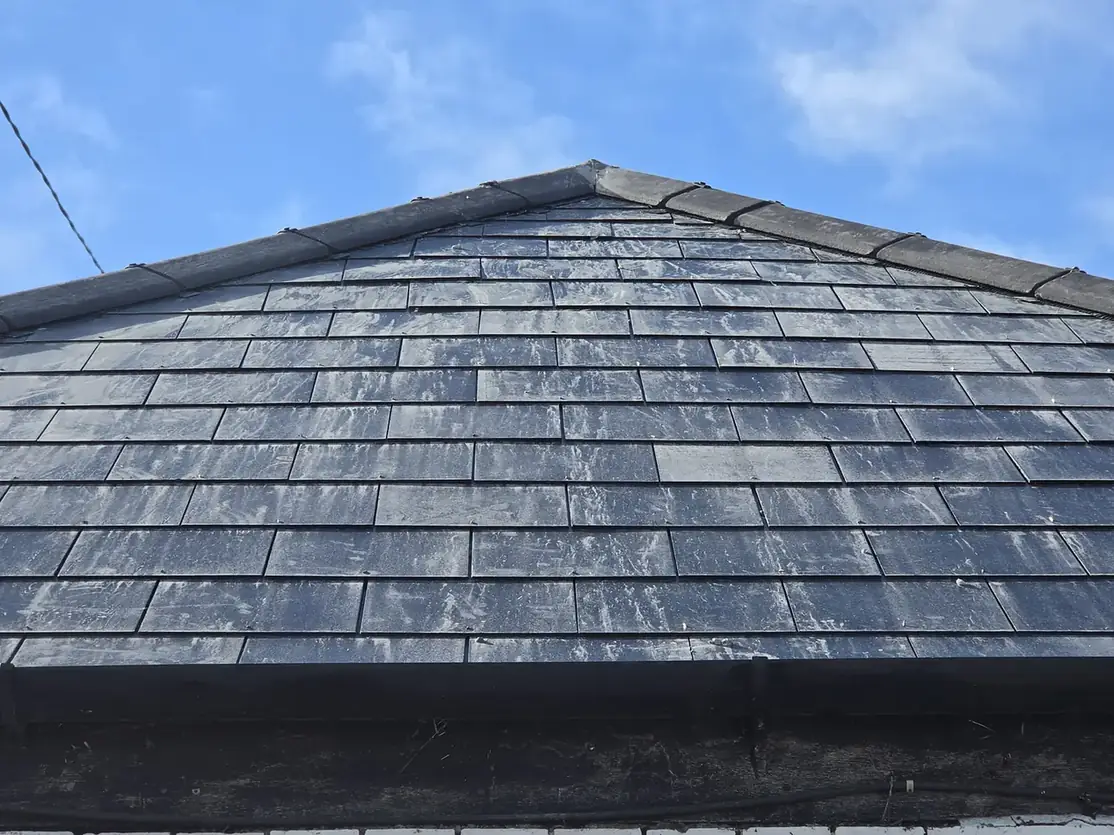
This gable end is a new slate roof we finished in Newcastle, with the ridge tiles fixed along the top on a dry system rather than bedded in mortar. Because it was a full re-roof, BS 5534 required the ridge to be mechanically fixed, so each tile is screwed down through a union and the top course of slates is clipped as well. Nothing along that line relies on mortar.
On an existing roof we do not always go that far. A sound ridge on a sheltered street can be re-bedded and be fine. But if the top course of slates has started slipping where the ridge has moved, that becomes a slate refixing job as well, and we would rather do both while we are up there. And if the ridge has already gone over the edge in a gale, that is a storm damage call-out first, with the proper repair once the wind has dropped.
Whichever route we take, you get photos along the whole ridge before and after, and the quote says whether it was bedded or screwed.
On roughly three out of every four ridge call-outs we attend on the high ground around Westerhope and Low Fell, more than half the ridge tiles are loose by the time one has actually come off.
Based on the enquiries and jobs handled by Huckleberry Roofing Ltd. A rough picture of what we see, not a formal survey.Ridge And Hip Repair Guide Prices
Re-bedding a short run of ridge from a ladder, or replacing a hip iron and the bottom two hip tiles, sits at the lower end. A full dry ridge and dry hip conversion on a hipped 1930s semi, with scaffold or a tower to reach it safely, sits at the top. VAT included and the price is in writing before we start.
£150 - £900
See The Full Cost GuideRidge And Hip Questions People Ask Us
Does the law say my ridge has to be dry fixed?
How do I know if the hip iron has gone?
The ridge was re-pointed two years ago. Why is it loose again?
Can you re-bed bonnet hips on a 1930s clay roof?
Do I need planning permission to change to a dry ridge?
A ridge tile came off in the wind. Is that an emergency?
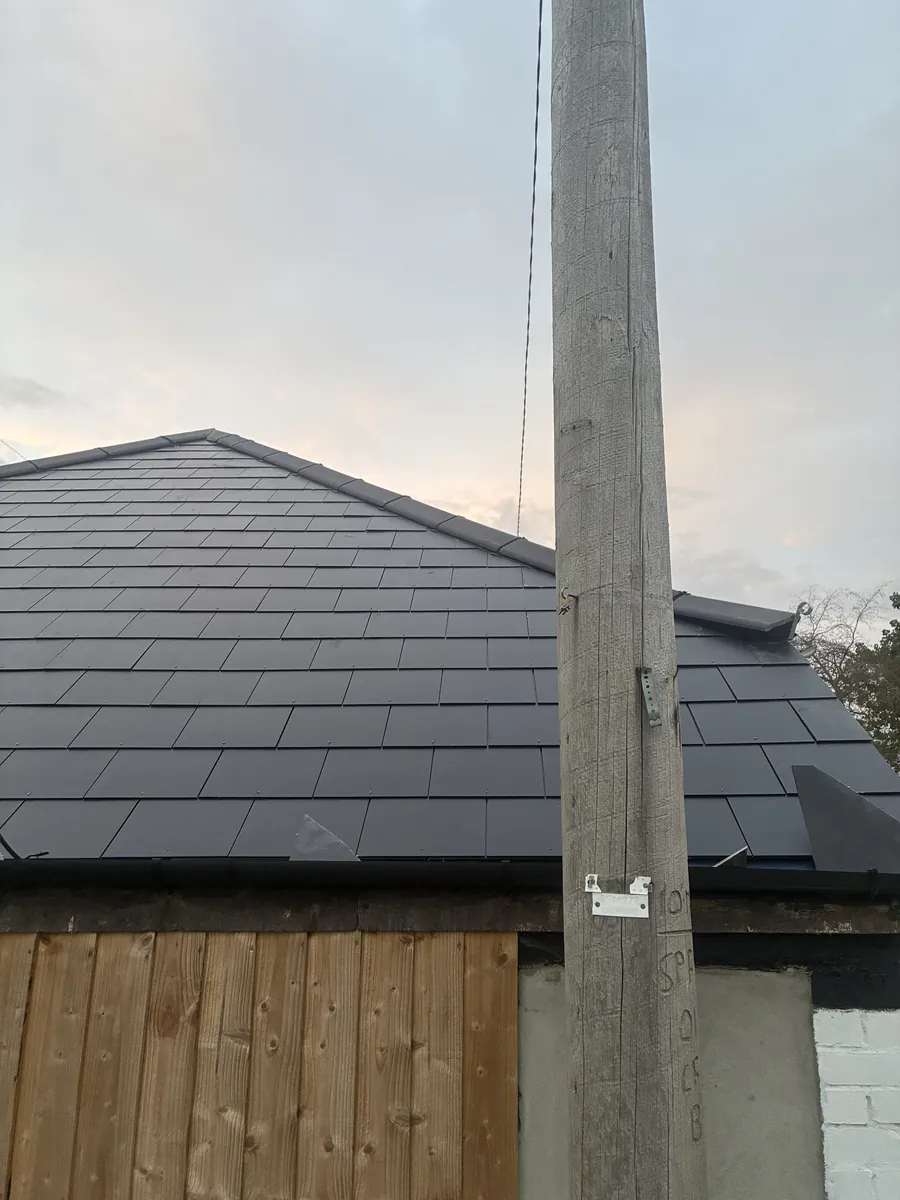
Ridge & Hip Tile Repairs Across Tyne And Wear
Newcastle upon Tyne is home turf, and we cover the rest of Tyne and Wear from there. Pick your area for the local page, or just ring if you are somewhere in between.
Pin The Ridge Down Before The Wind Gets Up
Ring us and we will walk the ridge, tug every tile, and give you a written price for re-bedding or a dry system. Free inspection, no pressure, and we will say if it is fine as it is.